
Parasite Prevention
Protection From the Risks You Don't Always See
Your pet doesn’t have to have fleas — or even spend much time outside — to be exposed to parasites.
Mosquitoes find their way indoors. Fleas can establish themselves inside the home. Ticks are found in backyards, parks and everyday environments, and intestinal parasites can infect pets that appear completely healthy.
Heartworms, fleas, ticks and intestinal parasites can cause significant illness. Some parasites can also affect people.
That’s why parasite prevention is an important part of preventive healthcare throughout your pet’s life.
At Abbey Animal Hospital, we recommend consistent, year-round parasite protection for dogs and cats.
We’ll consider your pet’s age, health, lifestyle and individual risk and recommend appropriate protection — while making sure you understand what it protects against and why we recommend it.


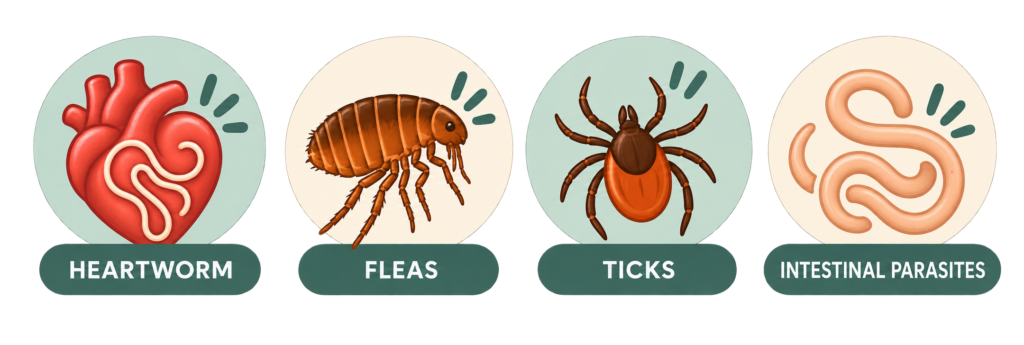
Parasite Prevention for Dogs
Heartworm disease is spread through the bite of an infected mosquito. Once infected, dogs can develop adult heartworms in the heart and pulmonary blood vessels, causing progressive and potentially life-threatening disease.
The good news is that heartworm disease is preventable.
We recommend year-round heartworm prevention for dogs along with regular heartworm screening.
Adult dogs should continue to be tested annually, even when they consistently receive prevention. Prevention is highly effective, but it doesn’t replace routine screening. Annual testing gives us an opportunity to identify an infection as early as possible if one occurs.
Puppies can begin appropriate heartworm prevention before a new infection would be detectable on a standard heartworm test. We’ll let you know when prevention should begin and when your puppy’s first heartworm test is due.
Has your dog missed doses or had a lapse in prevention?
Tell us. The appropriate timing of testing and restarting prevention can depend on when doses were missed. We’ll help you determine what comes next.
A flea problem is about much more than itching.
Fleas can cause significant skin irritation, trigger flea-allergy dermatitis and transmit other parasites, including tapeworms. And once fleas establish themselves in a home, the problem is no longer just on your pet. Eggs and immature flea stages can be present in carpets, bedding, furniture and other areas of the environment.
Consistent prevention is much easier than eliminating an established infestation.
Ticks can transmit important infectious diseases, including Lyme disease and other tick-borne infections. Your dog doesn’t have to spend weekends hiking through the woods to encounter them.
Ticks can be found in yards, parks, walking trails and other everyday environments and may remain active whenever environmental conditions allow.
That’s one reason we recommend reliable, year-round tick protection.
Depending on your dog’s age, history and risk, we may also recommend screening for tick-borne disease as part of their preventive care.
Roundworms, hookworms, whipworms, tapeworms and other intestinal parasites can affect dogs at every stage of life.
Some cause obvious symptoms such as diarrhea, vomiting or weight loss. Others may cause few or no outward signs. That means a dog can look perfectly healthy and still have an intestinal parasite infection. Some intestinal parasites can also infect people, making parasite control important for both animal and human health.
Routine fecal screening remains an important part of preventive care, even for dogs receiving year-round parasite protection, because no single preventive protects against every parasite your dog may encounter.
Parasite Prevention for Cats
Indoor Cats Need Protection Too
One of the most common questions we hear is:
“But my cat never goes outside. Does she really need parasite prevention?”
Indoor living reduces exposure to some parasites, but it doesn’t eliminate it.
Mosquitoes come indoors. Fleas can enter the home on other animals or establish themselves in the indoor environment. And depending on your cat’s lifestyle and household, exposure to other parasites can still occur.
That’s why we recommend discussing parasite protection for every cat — including cats that live entirely indoors.
Cats can develop heartworm disease after being bitten by an infected mosquito, and indoor living doesn’t eliminate that risk.
Heartworm disease also behaves differently in cats than it does in dogs. Cats typically carry fewer worms, but even a small number — or immature infections — can cause significant inflammation and respiratory disease.
There is another important difference:
There is no approved medication to eliminate adult heartworms in cats.
That makes prevention particularly important.
Unlike dogs, routine heartworm testing in healthy cats isn’t required before beginning an appropriate preventive. Heartworm diagnosis in cats is also more complex than it is in dogs. If your cat has symptoms or other findings that concern us, your veterinarian may recommend diagnostic testing.
The good news is that heartworm disease is preventable.
We recommend year-round heartworm prevention for dogs along with regular heartworm screening.
Adult dogs should continue to be tested annually, even when they consistently receive prevention. Prevention is highly effective, but it doesn’t replace routine screening. Annual testing gives us an opportunity to identify an infection as early as possible if one occurs.
Puppies can begin appropriate heartworm prevention before a new infection would be detectable on a standard heartworm test. We’ll let you know when prevention should begin and when your puppy’s first heartworm test is due.
Has your dog missed doses or had a lapse in prevention?
Tell us. The appropriate timing of testing and restarting prevention can depend on when doses were missed. We’ll help you determine what comes next.
Yes, indoor cats can get fleas.
Fleas can enter the home on other animals and establish themselves indoors. They can cause itching and allergic skin disease and can transmit parasites such as tapeworms.
Cats are also extremely effective groomers, so you may never actually see a flea even when fleas are present.
Consistent prevention helps stop an exposure from becoming a much larger problem for your cat — and your home.
Cats that spend time outdoors generally have greater opportunity for tick exposure, but every cat’s lifestyle and risk are different.
We’ll consider how your cat actually lives and recommend appropriate protection.
One Important Safety Rule
Never use a flea or tick product intended for dogs on your cat unless your veterinarian has specifically confirmed that it is safe.
Some ingredients used in products for dogs can be extremely toxic to cats.
If you’re unsure whether something is safe for your cat, call us before using it.
Cats can acquire intestinal parasites through contaminated environments, fleas, other animals and — particularly for cats that hunt — infected prey.
Kittens are especially vulnerable, but adult cats can be infected too, including cats that appear completely healthy.
Routine fecal screening, appropriate deworming and ongoing parasite prevention help protect your cat and reduce exposure to parasites that can potentially affect people.


Why Year-Round Prevention?
Parasites don’t follow a perfectly predictable calendar.
Fleas can survive and reproduce inside homes. Ticks can become active whenever environmental conditions are suitable. Mosquito exposure isn’t limited neatly to the summer months, and intestinal-parasite exposure can occur throughout the year.
Stopping and restarting medication can also create gaps in protection that aren’t always obvious.
That’s why we recommend consistent, year-round parasite prevention rather than thinking of it as something your pet only needs during “flea and tick season.”
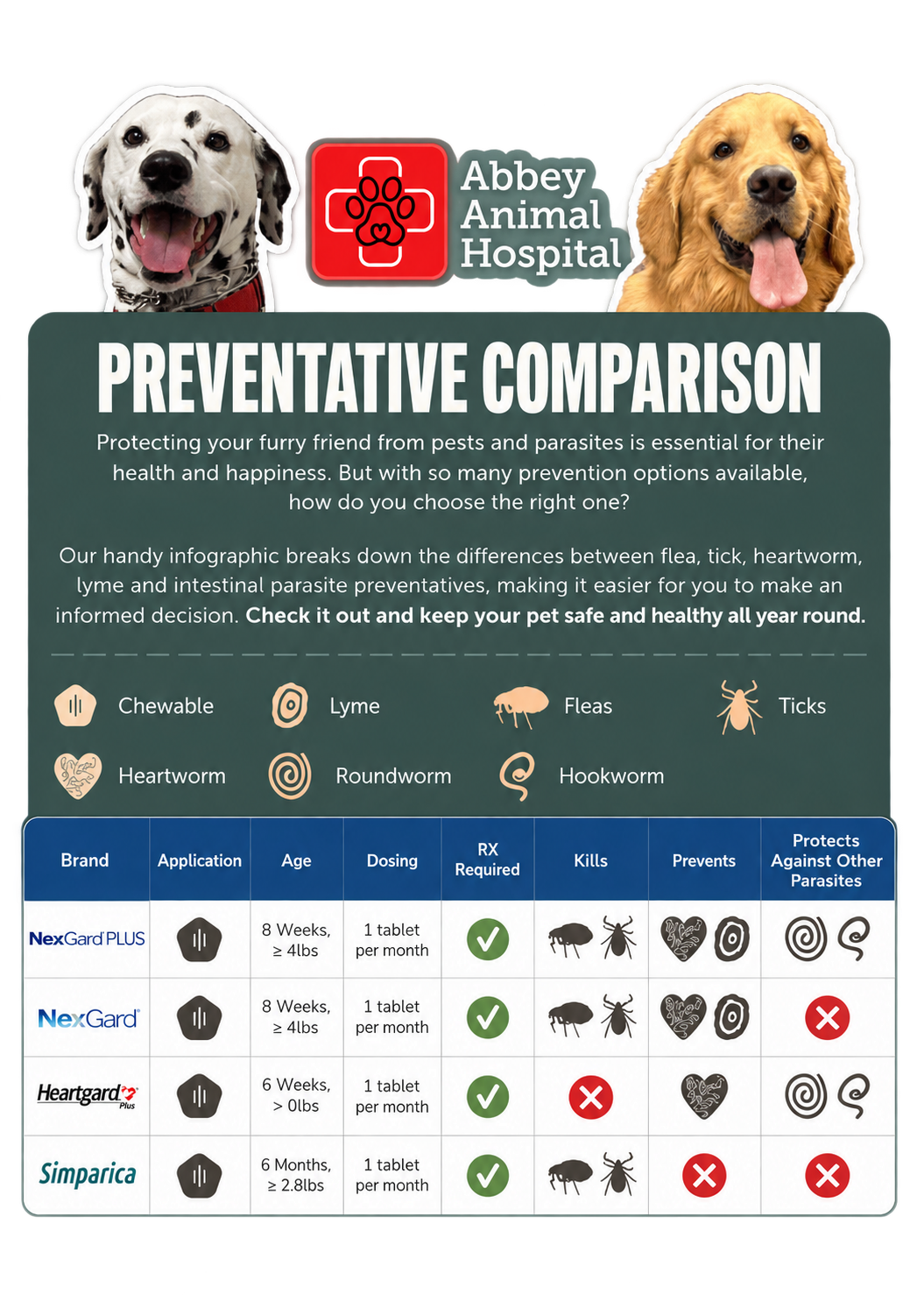
Which Prevention is Right for My Pet?
There are a lot of options — and they don’t all protect against the same things.
Depending on the product, parasite prevention may provide protection against:
Heartworms
Fleas
Ticks
Roundworms
Hookworms
Other intestinal parasites
Products also differ in how they’re given, how frequently they’re given and which dogs or cats they’re appropriate for.
You don’t need to work that out on your own.
We’ll consider your pet’s species, age, weight, health, lifestyle and individual risk and recommend an appropriate option. We’ll also explain what it protects against and why we’re recommending it.
Compare Your Options
Frequently Asked Questions
Yes. Indoor living can reduce exposure to some parasites, but it doesn’t eliminate the risk.
Mosquitoes can enter homes through doors, windows and other openings, so indoor cats can still be exposed to heartworm disease. Fleas can also enter on other animals or establish themselves inside the home.
Your cat’s lifestyle still matters, and we’ll take it into account when making recommendations. But “indoor only” doesn’t automatically mean “no parasite risk.”
Yes. Your own yard is still an outdoor environment.
Mosquitoes, fleas and ticks don’t distinguish between a backyard and a hiking trail, and exposure to intestinal parasites can also occur in familiar environments.
We recommend year-round protection and will help determine the appropriate coverage for your dog.
Not necessarily.
Different preventives provide different types of protection. A product that protects against fleas and ticks may not protect against heartworm disease or the intestinal parasites we’re concerned about.
That’s why we look at your pet’s complete parasite protection, rather than simply whether they are “on prevention.”
If you’re not sure what your pet’s current medication covers, ask us. We can check.
Because prevention and testing do different jobs.
Heartworm prevention is highly effective, but missed or delayed doses, difficulty administering medication and other factors can create gaps in protection.
Annual heartworm testing is recommended even for dogs consistently receiving prevention so that an infection can be identified as early as possible if one occurs.
Because no single preventive protects against every intestinal parasite your pet may encounter.
Some intestinal parasite infections also cause few or no obvious symptoms. Your pet can look and feel completely healthy while carrying a parasite.
Routine fecal screening gives us another way to detect infections that might otherwise go unnoticed.
We recommend year-round protection.
Fleas can live and reproduce indoors, ticks can become active whenever conditions are suitable, mosquito activity doesn’t follow a perfectly predictable calendar, and exposure to intestinal parasites can occur throughout the year.
Consistent prevention also eliminates the gaps that can happen when medication is repeatedly stopped and restarted.
Call or text us.
What we recommend may depend on which medication your pet takes, how long it has been since the last dose and whether additional testing is appropriate.
We’ll help you determine when to restart prevention and whether anything else needs to be done.
Some parasite preventives require a prescription and your pet needs to have an appropriate veterinarian-client-patient relationship with us for us to prescribe medication safely.
If your pet is due for an examination or required testing, we’ll let you know what is needed.
Call or text us and we’ll help you determine the next step.
Let's make sure your pet is protected
Whether you’re bringing home a new puppy or kitten, have an indoor cat, aren’t sure what your pet’s current medication covers, or have fallen behind on prevention, we can help.
We’ll look at your pet as an individual, explain what we recommend and why, and make sure you understand the protection they’re receiving.