
Pet Dentistry
Dental Care That Goes Beyond a Cleaning
Dental disease isn’t always obvious — but that doesn’t mean it isn’t painful.
Dogs and cats can continue eating, playing and behaving normally even when significant disease is developing above or below the gumline. Bad breath may be the first thing you notice. Sometimes, there are no obvious signs at home at all.
That’s why dental care at Abbey Animal Hospital begins with paying attention.
We examine your pet’s mouth during routine wellness care, document visible changes with dental photographs when possible and explain what we’re seeing. When treatment is recommended, you’ll receive a written Dental Treatment Plan outlining our findings and recommended care.
On the day of your pet’s dental procedure, the assessment goes further — with a complete anesthetized oral examination, periodontal probing and full-mouth dental radiographs that allow us to evaluate what simply can’t be seen while your pet is awake.
Our goal is to identify and treat disease, relieve discomfort and preserve healthy, functional teeth whenever possible.
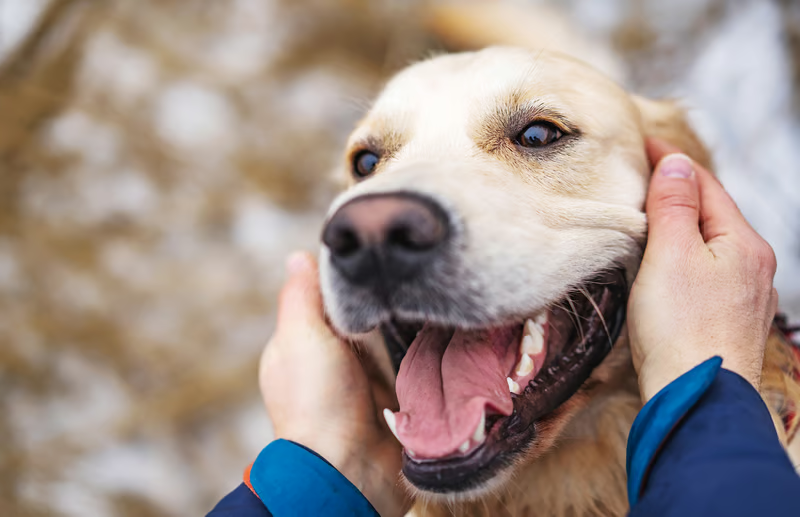
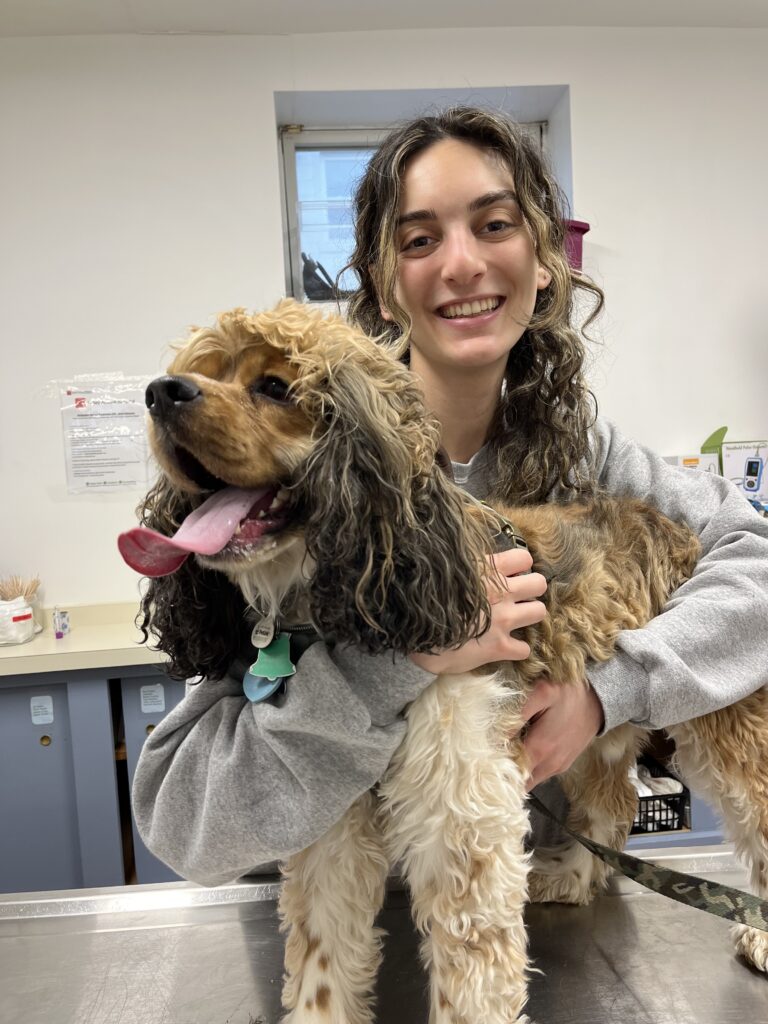
Dental Care Starts at the Wellness Visit.
Your pet’s mouth is an important part of every comprehensive wellness examination.
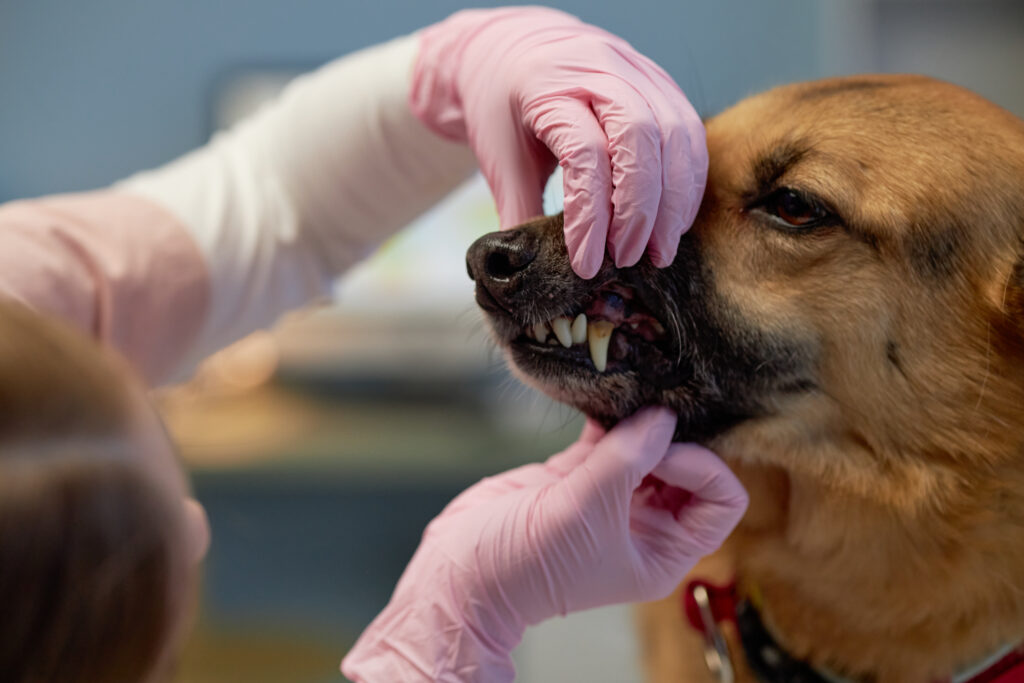
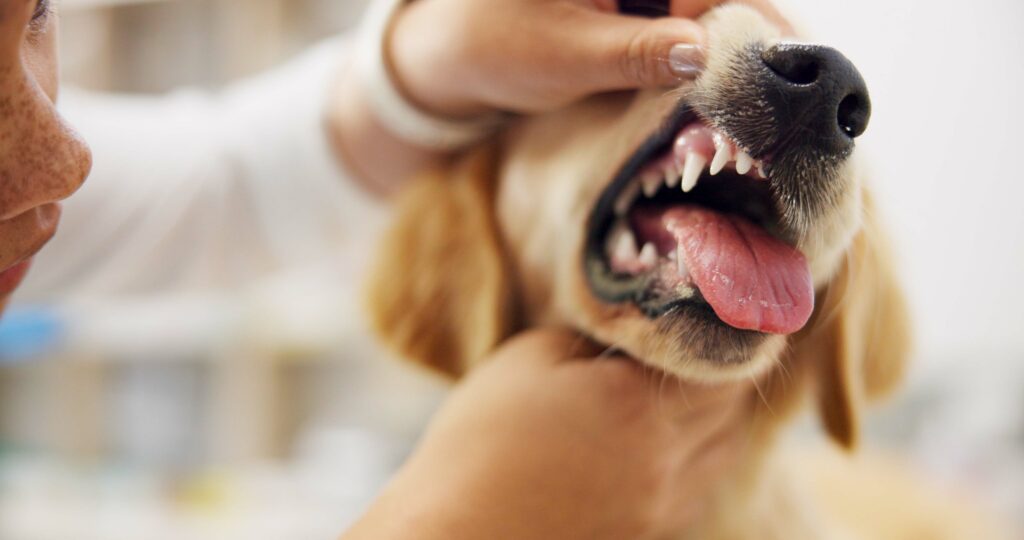
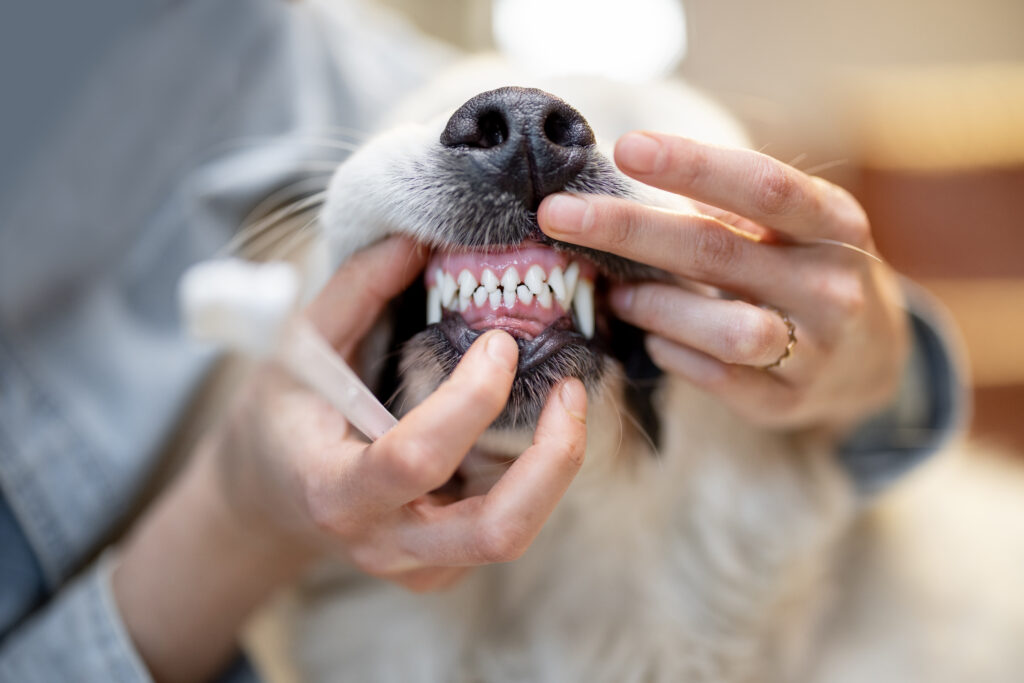
We’ll evaluate the teeth and gums for visible signs of dental disease, including plaque and tartar accumulation, gingivitis, gum recession, damaged teeth and other abnormalities.
When possible, we also take dental photographs to document what we’re seeing.
Why photographs? Because oral health changes over time.
Photographs create a visual record we can compare at future visits.
They also allow you to see what we’re seeing when we talk about your pet’s dental health.
If we identify dental disease, we’ll explain our findings and whether we recommend professional dental treatment.
Understanding Your Pet's Health
Dental Disease Exists on a Spectrum
Not every pet with dental disease needs the same treatment.
We assess the visible degree of disease during your pet’s awake examination. This helps us explain what we’re seeing, identify concerns and plan appropriately.
But an awake examination has limitations. A significant amount of dental disease occurs at or below the gumline, where it can’t be fully evaluated simply by looking inside your pet’s mouth.
That’s why the complete assessment takes place once your pet is safely under anesthesia.
Signs of Dental Disease
Your Pet May Not Tell You Their Mouth Hurts
Dogs and cats don’t always show dental pain in ways we expect.
Signs worth mentioning to us include:
- Persistent bad breath
- Red, swollen or bleeding gums
- Visible tartar or discoloration
- Loose, broken or damaged teeth
- Dropping food while eating
- Chewing differently or favoring one side
- Reluctance to eat hard food or treats
- Excessive drooling
- Pawing or rubbing at the mouth
- Swelling around the face or jaw
- Becoming less tolerant of having the face or mouth touched
But sometimes there are no obvious signs at all. A pet may continue eating normally despite significant periodontal disease or a painful tooth.
That’s one reason regular oral examinations are so important.
Frequently Asked Dental Questions
Your Pet May Not Tell You Their Mouth Hurts
Dogs and cats don’t always show dental pain in ways we expect.
Signs worth mentioning to us include:
- Persistent bad breath
- Red, swollen or bleeding gums
- Visible tartar or discoloration
- Loose, broken or damaged teeth
- Dropping food while eating
- Chewing differently or favoring one side
- Reluctance to eat hard food or treats
- Excessive drooling
- Pawing or rubbing at the mouth
- Swelling around the face or jaw
- Becoming less tolerant of having the face or mouth touched
But sometimes there are no obvious signs at all. A pet may continue eating normally despite significant periodontal disease or a painful tooth.
That’s one reason regular oral examinations are so important.
If your veterinarian identifies dental disease during your pet’s examination, we’ll show you what we’re seeing and explain why treatment is recommended.
You’ll receive a written Dental Treatment Plan based on the findings we can identify during the awake examination.
Your plan helps you understand the degree of disease we’ve identified, the treatment we anticipate and what to expect from your pet’s dental procedure.
There is one important thing to understand:
We can’t see everything while your pet is awake.
The final assessment requires anesthesia, periodontal probing and full-mouth dental radiographs.
Those findings may confirm what we anticipated — or reveal disease below the gumline that couldn’t be identified during the awake examination.
We’ll make sure you understand that before your pet’s procedure.
A professional veterinary dental procedure is much more than removing visible tartar.
Once your pet is safely under anesthesia, we’re able to thoroughly examine and treat the entire mouth.
A comprehensive dental procedure at Abbey includes:
- Complete anesthetized oral examination
- Assessment of each tooth
- Periodontal probing
- Full-mouth dental radiographs
- Professional scaling above and below the gumline
- Polishing
- Treatment of dental disease identified during the procedure
- Surgical extractions when medically necessary
- Appropriate pain management
- Anesthesia and patient monitoring throughout the procedure and recovery
Much of the Tooth Is Hidden
What you can see above the gumline is only part of the picture.
The roots of the teeth and their supporting structures lie below the gumline. Disease can be present there even when a tooth doesn’t look dramatically abnormal from the surface.
Full-mouth dental radiographs allow us to evaluate the roots, surrounding bone and other structures we simply can’t see during an awake examination.
They may identify disease that changes what treatment a tooth needs.
That’s why full-mouth dental radiographs are part of our comprehensive dental assessment.
Finding dental disease doesn’t mean we’re looking for teeth to remove.
Quite the opposite.
Our goal is to preserve healthy, functional teeth whenever possible while appropriately treating teeth that are diseased, damaged or painful.
Sometimes the awake examination gives us a strong indication that a particular tooth may require a surgical extraction.
Other times, the need for treatment only becomes clear after periodontal probing and review of the dental radiographs.
Those diagnostic findings help us make treatment decisions based on the health of each individual tooth.
Why Veterinary Dentistry Requires Anesthesia
We understand why pet owners have questions about anesthesia — particularly when their pet is older or has another medical condition.
Anesthesia allows us to perform the complete examination and treatment that simply isn’t possible in an awake patient.
It allows us to safely:
- Examine the entire mouth
- Probe around each tooth
- Obtain diagnostic dental radiographs
- Clean thoroughly above and below the gumline
- Treat dental disease without fear, stress or pain
- Protect your pet’s airway from water and debris during the procedure
Before your pet’s dental procedure, we’ll evaluate their health and recommend appropriate pre-anesthetic testing.
Your pet is carefully monitored throughout anesthesia and recovery.
If you’re worried about anesthesia, tell us. We want you to understand both why we’re recommending the procedure and how we’ll care for your pet throughout it.
Dental procedures at Abbey Animal Hospital are performed by Dr. Jay, with our trained team supporting anesthesia, monitoring, dental radiographs, treatment and recovery.
The veterinarian who identifies your pet’s dental disease during a wellness or other examination may not be the veterinarian performing the dental procedure.
That’s intentional.
Our dental program is structured so that the findings identified during your pet’s examination, their Dental Treatment Plan and the information from their procedure all work together as part of one coordinated process.
Dental care doesn’t begin and end on the day of your pet’s procedure.
If we recommend dental treatment, we’ll explain what we’re seeing and provide your pet’s Dental Treatment Plan.
Our team will help you understand the recommended care, coordinate scheduling and explain how to prepare for the procedure.
After treatment, we’ll review what we found, what was treated and what you need to know about your pet’s recovery and ongoing dental care.
Our goal is for you to know:
What we’re seeing.
What we’re recommending.
Why we’re recommending it.
And what comes next.
Age Alone Doesn’t Make a Pet “Too Old” for Dental Care
Dental disease becomes increasingly common as pets age, and older pets may have been living with oral discomfort for some time.
Age itself doesn’t determine whether a pet can safely undergo anesthesia.
What matters is the individual patient.
We’ll consider your pet’s physical examination, medical history and appropriate pre-anesthetic diagnostics when evaluating them for a dental procedure.
If another medical condition changes your pet’s anesthetic risk, we’ll discuss that with you.
The decision is about your individual pet — including both the considerations associated with anesthesia and the consequences of leaving painful or progressive dental disease untreated.
What Happens Between Visits Matters Too
Professional dental treatment and home care have different roles.
Once your pet’s mouth is healthy, appropriate home dental care can help slow plaque accumulation and support oral health between veterinary visits.
For many pets, regular tooth brushing is the most effective form of home care when it can be done safely and consistently.
Dental diets, chews and other products may also be useful.
Not every product marketed for dental health provides the same benefit, so ask us if you’re unsure what to use.
Dental Problems Aren’t Always Easy to Spot
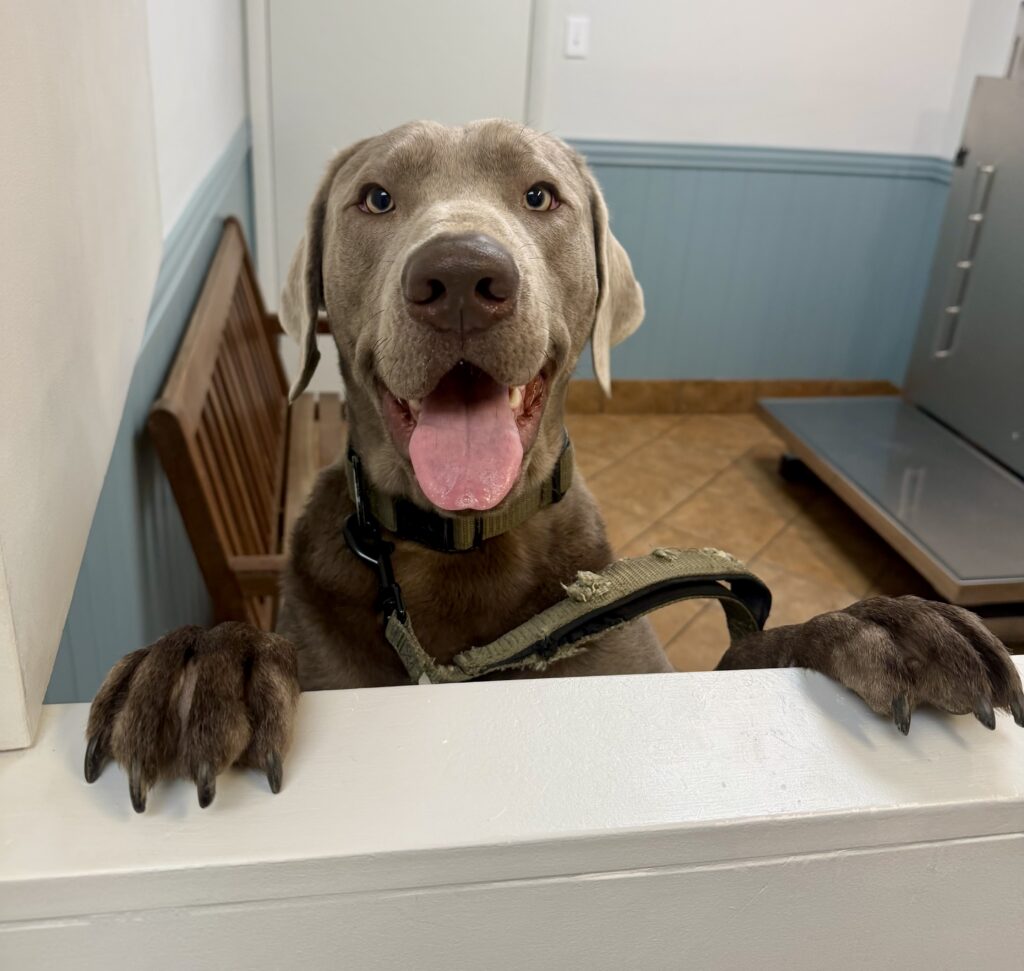
Pets can’t tell us when a tooth hurts, and many continue eating and acting normally even when something is wrong. Bad breath, red or swollen gums, tartar buildup, difficulty chewing or changes in eating habits can all be signs that your pet’s mouth needs attention.
Regular dental exams help us identify concerns that may otherwise go unnoticed and determine whether your pet could benefit from a professional cleaning or additional dental care.
Not sure if your pet needs dental care?