
Diagnostics
When the Answer Isn’t Obvious
Sometimes you know exactly what’s wrong. Your dog is limping. Your cat has stopped eating. There’s vomiting, coughing, a new lump, or an injury you can see.
Other times, it’s not so clear. Your pet just isn’t acting like themselves, and you know something isn’t right.
A thorough physical examination can tell us a great deal, but it doesn’t always give us the whole picture. That’s where diagnostic testing becomes so valuable.
At Abbey Animal Hospital, we have access to a wide range of diagnostic tools to help us understand what’s happening with your pet. From bloodwork, urine testing, and other laboratory services performed right here in our hospital to more specialized testing through trusted veterinary reference laboratories, we can investigate concerns that aren’t always apparent during an examination.
We also have digital X-ray capabilities in our hospital, allowing us to examine bones, joints, and internal structures. When a case calls for additional expertise, we can consult with veterinary radiology specialists and other experts to help us interpret findings and determine the best next steps.
Of course, not every pet needs extensive testing. We’ll talk with you about what we recommend, why we recommend it, and what the results may help us understand.
Because good veterinary care isn’t about running more tests. It’s about getting the right information to make thoughtful, informed decisions about your pet’s health.
Starting with Your Pet
Diagnostic testing doesn’t happen in isolation.
We start with your pet’s history, what you’ve noticed at home and a thorough physical examination.
Has your pet stopped eating? Are they drinking more? Losing weight? Limping? Vomiting? Coughing? Sleeping more? Having accidents in the house?
Sometimes a detail that seems insignificant can help us understand the bigger picture.
From there, we’ll decide whether testing is needed and which diagnostics are most likely to give us useful information.
That might mean bloodwork. It might mean an X-ray. Sometimes we need several pieces of information before the picture becomes clear.
The right care starts with the right information — and the right information is different for every patient.
Laboratory Testing
More Than Numbers on a Page
Blood, urine, fecal and other laboratory tests can tell us things that aren’t possible to determine from a physical examination alone.
Depending on what we’re investigating, testing may help us evaluate:
- Red and white blood cells
- Liver and kidney function
- Blood sugar
- Electrolytes
- Thyroid function
- Urinary health
- Intestinal parasites
- Heartworm and tick-borne disease
- Other changes related to your pet’s symptoms or medical history
We have access to in-house testing when timely information matters, as well as comprehensive outside veterinary laboratory services for broader or more specialized testing.
But getting the result is only part of the process.
We interpret those results alongside your pet’s examination, symptoms, history and, when available, previous results.
That last part can be particularly useful.
Changes over time may tell us something that a single result can’t.
Digital X-Rays
A Look Inside
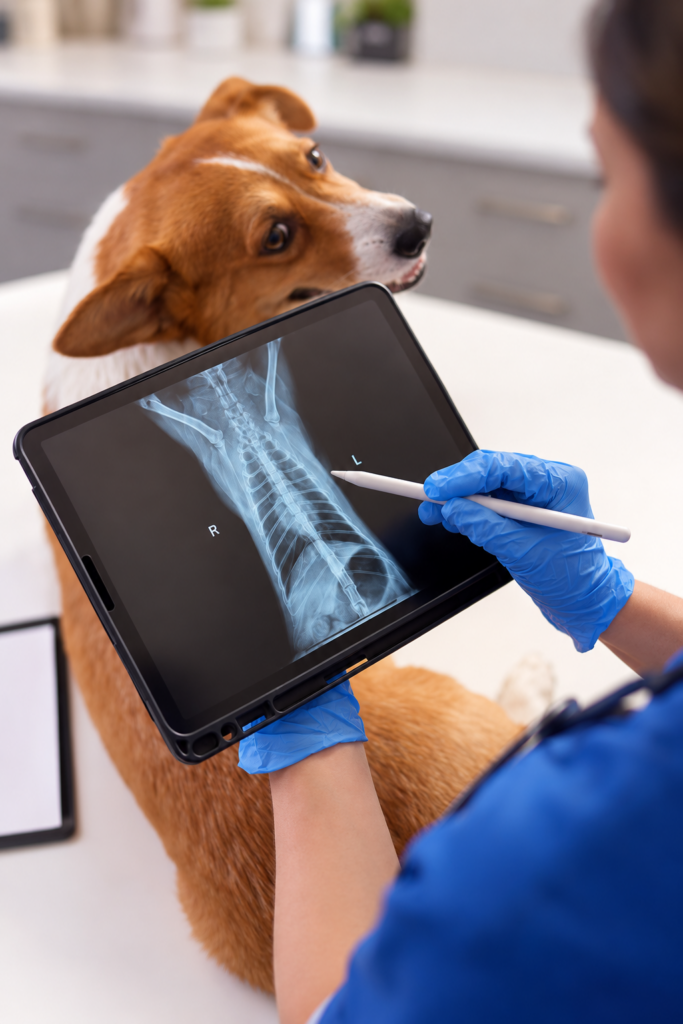
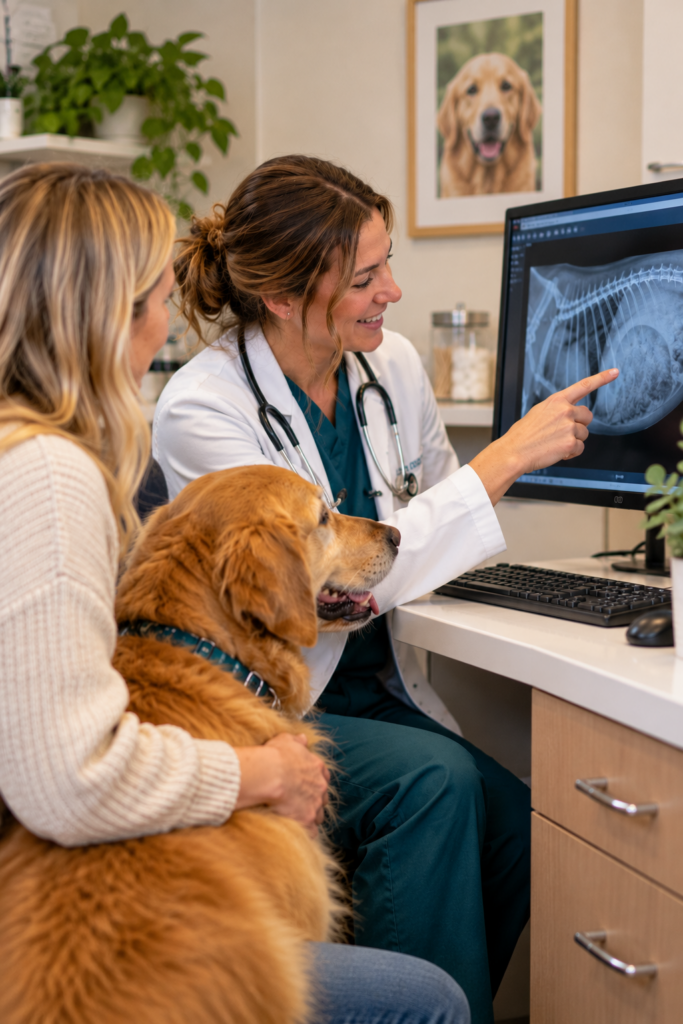
Digital radiographs — more commonly called X-rays — allow us to evaluate structures inside your pet’s body that we can’t see during a physical examination.
They can be useful when we’re investigating:
- Broken bones and injuries
- Arthritis and certain spinal problems
- Heart and lung changes
- Changes involving internal organs
- Possible intestinal foreign bodies or obstruction
- Bladder stones
- Certain masses or other abnormalities
X-rays aren’t necessary for every sick pet, and they don’t answer every question.
When we recommend them, we’ll explain what we’re looking for and how the images may help us decide what to do next.
Ultrasound
X-rays and ultrasound allow us to look at the body in different ways.
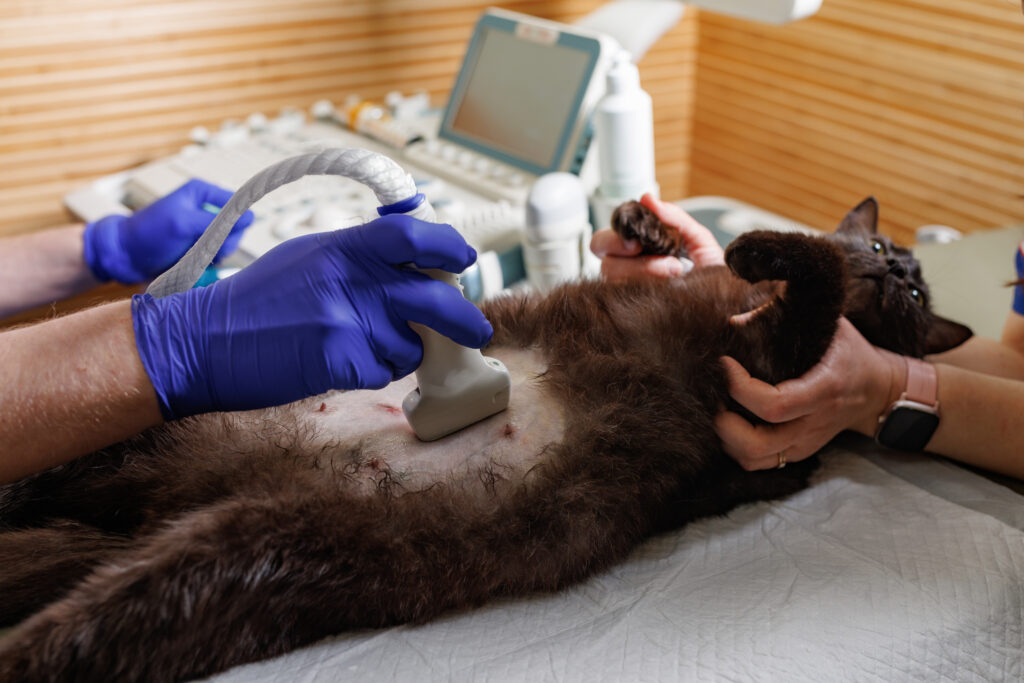
Ultrasound uses sound waves to create real-time images of internal structures and can give us information about soft tissues and abdominal organs that isn’t available from an X-ray alone.
Our veterinarians can perform focused ultrasound examinations at Abbey when appropriate.
When a pet needs a more comprehensive ultrasound examination or additional imaging expertise, we can arrange for an experienced mobile ultrasonographer to perform the study here at the hospital.
For many patients, that means access to more advanced imaging without immediately having to travel somewhere unfamiliar.
Sometimes One Test Leads to Another
We know it can be frustrating when a test doesn’t give us one immediate answer.
Medicine doesn’t always work that way.
Bloodwork may tell us that something isn’t functioning normally without telling us exactly why. An X-ray may show a change that needs a closer look with ultrasound. A test may rule out one concern and point us toward another.
If that happens, we’ll talk you through it.
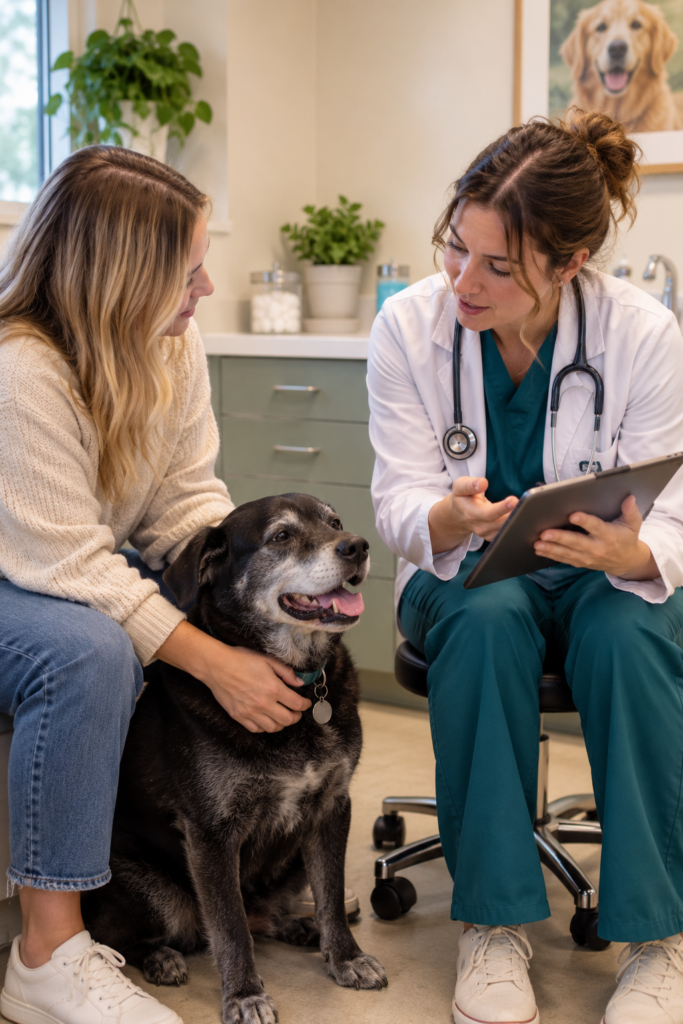
We’ll tell you what we’ve learned, what we still don’t know and whether another step is likely to give us useful information.
We don’t want you leaving with a stack of results you don’t understand.
We want you to understand what those results mean for your pet.
Diagnostics aren't Only for Sick Pets
Diagnostic testing also plays an important role in preventive care.
A pet can look and act completely healthy while changes are beginning internally.
Routine screening at appropriate life stages can establish a baseline for your pet and sometimes identify changes before they become obvious at home.
As pets get older, being able to compare today’s results with their previous results becomes increasingly valuable.
What’s normal for the population isn’t always the whole story.
We want to know what’s normal for your pet.
When Testing Identifies A Problem
Finding something isn’t the end of the conversation.
It’s where we decide what comes next.
Depending on the diagnosis, that may mean medication, a change in diet, monitoring, additional testing, surgery or referral for more advanced care.
Many conditions can continue to be treated and monitored here at Abbey.
If your pet needs something beyond what is appropriate for a general veterinary hospital, we’ll tell you and help guide you toward the right next step.
Our priority is getting your pet the care they need — whether that care happens here or somewhere else.
Frequently Asked Diagnostic Questions
Absolutely.
You don’t need to diagnose your pet before calling us.
Tell us what you’ve noticed — even if the only thing you can say is that your pet isn’t acting normally.
We’ll start there.
A physical examination and laboratory testing give us different information.
We can learn a great deal by examining your pet, but we can’t see how their kidneys are functioning, evaluate their blood cells or measure their blood sugar simply by looking at them.
If we recommend testing, we’ll explain what information we’re looking for.
Because they show us different things.
X-rays are particularly useful for bones and for looking at the overall size, shape and position of structures within the chest and abdomen.
Ultrasound can give us a closer look at the internal appearance of many soft tissues and organs.
Sometimes one is all we need. Sometimes they work together.
Not necessarily.
It depends on what we need to image, the positions required and how comfortable your pet is with being positioned.
If sedation would allow us to obtain the images we need more safely and with less stress or discomfort for your pet, we’ll discuss that with you.
We’ll talk with you about the next step.
Some patients need advanced imaging, specialist consultation or testing that isn’t available in a general veterinary hospital.
When that’s the case, we’ll explain why and help direct you to the appropriate care.
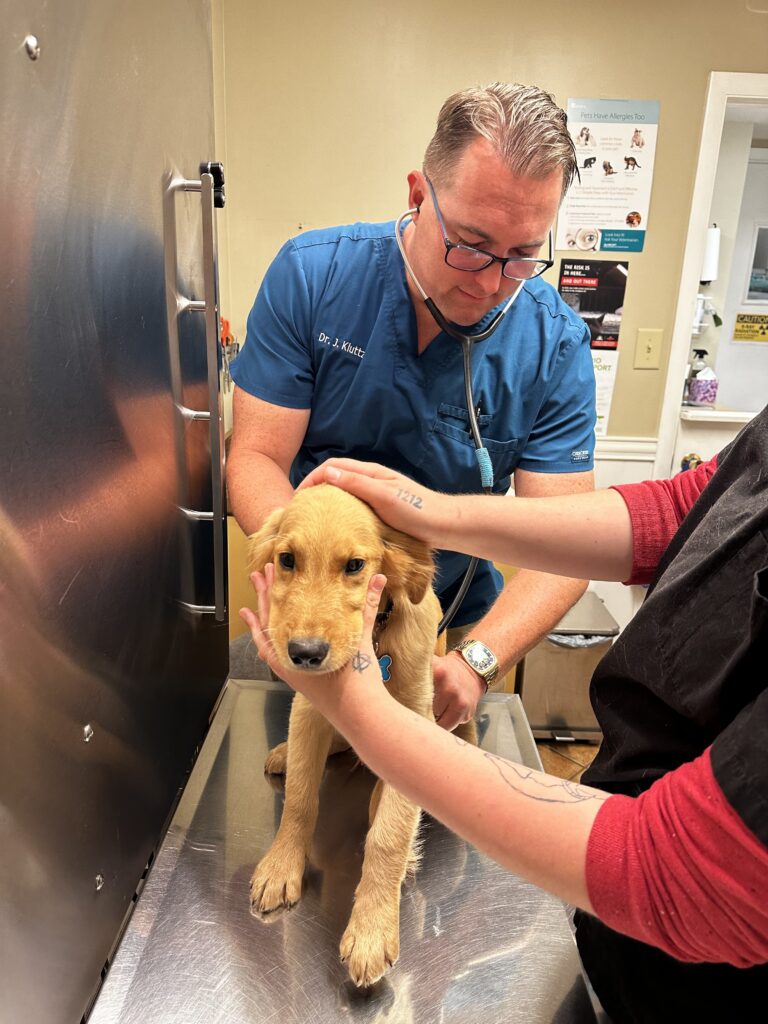
Has Something Changed?
You don’t need to know which test your pet needs — or whether they need testing at all.
That’s what we’re here to figure out.
Tell us what’s changed. We’ll examine your pet, listen to what you’ve noticed and decide together what makes sense to do next.